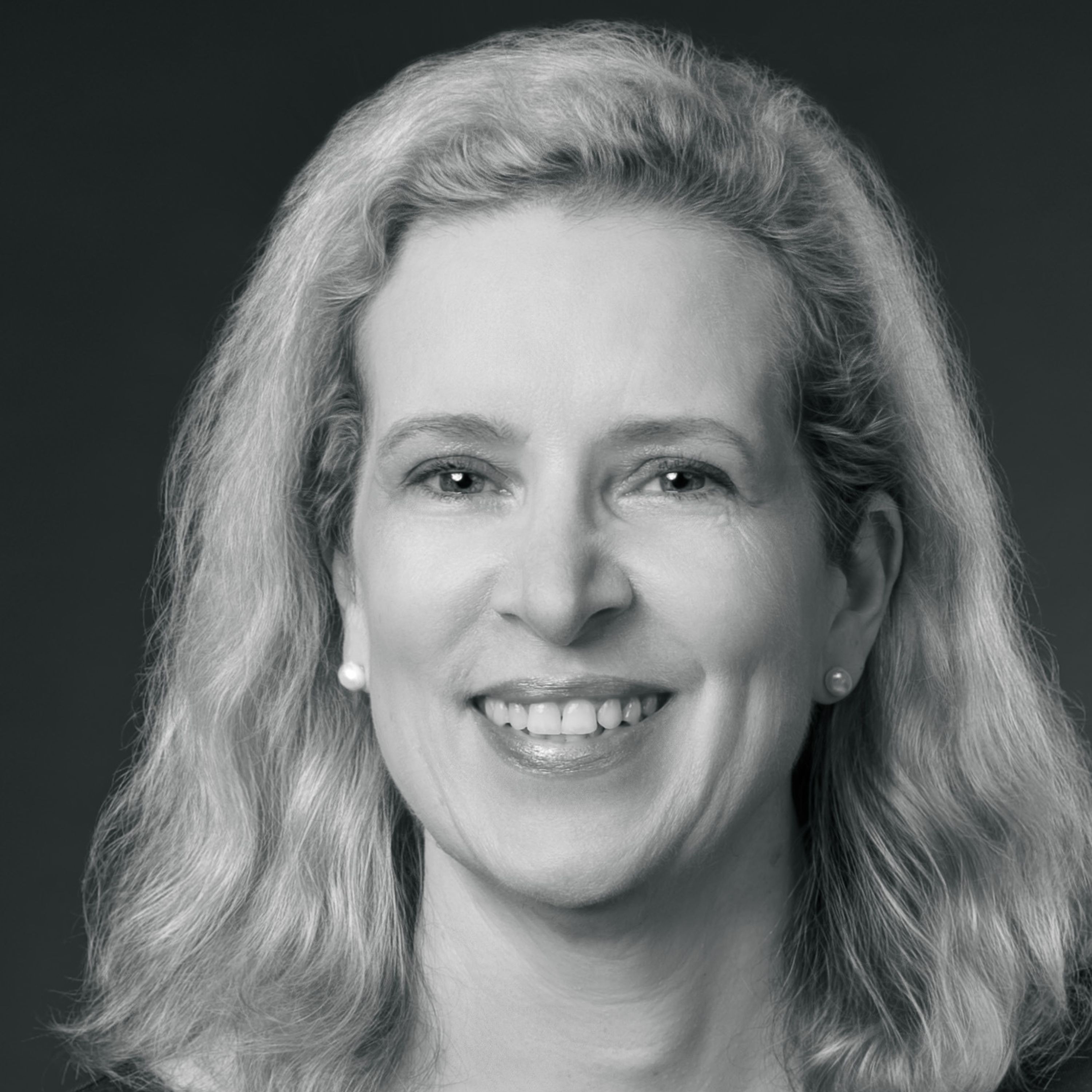
[00:00:05] Speaker A: Welcome to Drinks Insider, the podcast that's interested in everything you can drink, if it's legal, if you can sell it, and more importantly, if you can make money from it, then we're going to talk about it. So come on this journey into the commercial world of everything drinkable. I'm your host, Felicity Carter, and you're listening to Drinks Insider.
Wine producers are under extreme pressure. Connecting with buyers has never been more important, and the traditional route to that has run through the world's big trade fairs. My guest today is Frank Schindler, director of Provine, the international network of wine and spirits trade fairs organised by Messe Dusseldorf in Germany.
Frank came to the job from inside the wine business. He's worked in specialist retail, spent 15 years in Sud Tirol and led Austria's Esterhazy wine estate. But before all of that, he was part of Germany's national swimming squad. We talk about his unusual route into wine, what he's changing at Provine and why he thinks the industry needs to spend less time talking to enthusiasts and more time understanding everybody else.
So, Frank, you've got a very interesting background. You spent 10 years in Germany's national swimming squad.
Tell us about your swimming.
[00:01:32] Speaker B: Yeah, it's a long time ago, but I was talented and I was a really technical, skilled swimmer. And to be honest, I won the most of my races early on, but on the other hand, I never won a race on national or international level. And this was really hard to accept, but it really helped me in my professional career. And in boxing, I believe you would call me a perfect sparring partner, because if you were able to beat me, you were fast.
[00:02:04] Speaker A: Right.
[00:02:05] Speaker B: This is also a reason why I like the saying, train hard, play hard.
[00:02:10] Speaker A: Okay, so you're talking to an Australian. You know, swimming is our national sport, so I have to ask, what type of swimmer were you?
[00:02:17] Speaker B: I like the short distance butterfly.
[00:02:20] Speaker A: Butterfly. Okay, well, maybe that was just the wrong swimming. Maybe you should have. Maybe you're in the wrong. The wrong area of the pool.
No. And then you. And. And then you went into life saving. So. Tell me about that.
[00:02:34] Speaker B: Yeah, it was parallel. I was part of the swimming squad and the life saving squad at the same time. And I spent a lot of my spare times on the coasts, mostly in Germany, so we don't have that much coast. And I can remember some competitions also in Durban, South Africa, where I saw the first times waves that were bigger than me. And this really impressed me and scared me a lot.
So I was good in the pool, but not outside
[00:03:07] Speaker A: so, so how does life saving work? So here in Australia it's all voluntary. I once had a boyfriend who was a surf lifesaver and he spent his weekends pulling people out of the surf. Well, how does it work in Germany? Is it professional or is it voluntary?
[00:03:22] Speaker B: No, no, it's professional. And I was a professional lifesaver, especially on the coast of Sylt.
[00:03:31] Speaker A: Oh gosh.
[00:03:32] Speaker B: Indeed, I saved two people's life and under really difficult conditions. And this was somehow strange because they didn't like what I did at that time because I have to rip her off the water and it's brutal, but it's, it's not that gentle at the moment. And yeah, it was difficult at that time, but I loved it in somehow.
[00:03:58] Speaker A: Hang on, you, you rescued two people. You have to tell the whole story.
[00:04:03] Speaker B: I was part of the life saving crew for, for the suit. For the, for the, for the island suit. And we had some big waves. Big waves mean one, one and a half.
And I saw some, some were two women on two days in a row and I saw they were going too far from the, from the shore. And then I decided I have to swim to them. And it's difficult to swim because you swim with an, it's like a vest. And on this vest is a, is a, is a, is a T is not a tube. How is it called?
Something they can pull you out of the water so you just have to swim to the, to the person. Then you have to grab her and then she bring, they bring you back the other ones. And yeah, I swim through these people. I say, hey, you are too far away. No, no, no, no, no, no, I'm a good swimmer, I'm a good swimmer. And then I decided, no, no, she don't know what she's saying and what she's doing. And then I grab her and I pull her out of the water and as you can imagine, you get in touch with the body and she doesn't like where I touched her. And then they slapped me.
After all, I was bleeding on my shoulders because this jacket is really hard if there are 10 people pulling you out of the water and you are grabbing another one. So together we weighed something about 100, 220 kilograms or something like that. And they were just pulling on my shoulders and everything was bleeding. And yes, she slapped me. So this was my first impression to save everyone's life.
[00:05:52] Speaker A: Oh no. Well, my, my boyfriend Mark, he actually punched somebody once in the water. But anyways, you need to come and surf Lifesave in Australia. It Works the other way around. Okay, so.
So how did you go from swimming to wine?
[00:06:10] Speaker B: I studied in Cologne, sports and sports medicine. And at that time, I already was influenced by my family with wine. And my father ordered few cases of Noble sweet wines for an investment. And little by little, we began to consume this investment. And I dig deeper into this fascinating material of wine. And my mother was a biochemist, chemist, and she developed organic cosmetics. And so she.
So I had always the opportunity to have some smelling samples at home. And so it starts slowly, slowly. And I decided to go deeper in this field and start with the WSET courses in 2001, I believe.
[00:07:10] Speaker A: Okay, so no shade to your father, but the whole idea of investment is you don't open them and try them. But anyway, let's pass over that.
So did you do your WSET while you were swimming?
[00:07:22] Speaker B: Yeah, during the WSET courses, I decided to stop swimming and stop doing professional sport. And by this decision, I lost all my old friends because they can't understand why I spent so much money for wine and food, because food was necessary and wine wasn't necessary. So they don't drink wine at all. And the first month I tried to keep in touch with these people and bring some big bottles of wine, good wines, and they really don't understand. They put. They put some ice cubes in it and so on. And then I was a little bit pissed and they don't like it. And so. And then say, okay, let's go on another path.
[00:08:16] Speaker A: That's actually, that's. That's a very common experience from people who, you know, switch from one thing to another. But it's a really painful experience because you have to form a whole new community. Do you think that helped you engage more with wine because you were looking for another community?
[00:08:35] Speaker B: Honest, I was obsessed with wine. And I spent all the money I had for buying wine. My wife, my wife, my mother had to buy me clothes because I don't have the money.
Always spent the whole of my money for wine. And so I didn't care much about anything else than drinking the best wines in the world. And for me, there was just one goal and two options.
One thing, to have a job where I can.
Can taste the best wines in the world or a job where I have so much money that I can spend a lot of money for the best wines in the world. This was the only goal I had.
[00:09:23] Speaker A: Okay, so your father's investment strategy around sweet wines is now becoming clearer.
[00:09:28] Speaker B: But.
[00:09:30] Speaker A: Okay, so what you're describing is you're actually Describing something that's close to an obsession. Do you know where it came from? Do you remember what was the moment that you were like, this is what I'm going to spend my life doing?
[00:09:42] Speaker B: Not really. I was always like, I always liked drinking and eating, but I can remember the point.
I sat in a restaurant in Cologne with my former boy, a girlfriend, and she asked the waiter for a good bottle of wine. Then she described with these berries and that berries. And I said, okay, this will be super expensive.
And then the waiter was serving a wine from Spain, from Rioja Alta. And I completely fell in love. And then this was the first time I realized that everything the other people talk about was true. I could imagine this is a world I want to spend the rest of my life.
[00:10:30] Speaker A: Do you remember when that was?
[00:10:33] Speaker B: In five, I would say something like that.
[00:10:39] Speaker A: Can I ask how old you were when you had this revelation?
[00:10:44] Speaker B: I've 20.
[00:10:46] Speaker A: 20. Okay. All right. So you're obviously very focused. I mean, nobody gets to elite sports level unless they're very, very focused.
And, you know, everybody knows where they stand. It's very mathematical in a way. But wine, of course, is the opposite. It's very romantic. So how did you adjust from going to something like swimming, which is highly disciplined, to something like wine, where you sit around and eat and drink all the time?
[00:11:15] Speaker B: Yeah, to be honest, I never compared those two sides of my life. For me, wine business has always been shaped by passion and philosophy. And I like to think about the idea that some product is not only driven by the revenue, but by a philosophy. And especially at the beginning, I couldn't complain about a lack of control because I didn't know anything about the industry at all. So I was like a swamp.
I tried to try to understand everything I could at a time. And I was simply fascinated by these people's talk, talking about these people talking about wine. And in some fact, I met heroes and role model people and I realized that they were still alive.
I thought they were just icons that were long dead and I was able to communicate with them on one to one. So it was impressively good at that time.
[00:12:26] Speaker A: All right, so take us from doing the WACT and give us a short summary of your wine career after that.
[00:12:35] Speaker B: Okay. Starting with wset, I spent two years in the Koelner Wine Keller, one of the largest specialized wine shops. And I was half year, I was the managing director of this intermediate, not intermediate, interim CEO of Colonel Weinkeller. And then I was asked at Probine if I could imagine to join another company Based in South Tyrol. Bolzano.
I said yes. And I. I moved to Bolzano for 15 years.
And then I got a call from an, from a headhunter asking me to join esther hay in 2019. And I said, okay,
[00:13:35] Speaker A: can you explain what. Can you explain what Esterhazy does?
[00:13:39] Speaker B: Esterhazy is a noble family from, from Austria. And it's well known.
It's huge because the structure of Esterhazy is wide. They not only focus on wine, but also on real estate, on open air operas. And so. So it's a huge thing. And for me, this was one of the first wineries I visited in 2006 or seven, I believe, with the WSET course. And at that time I say, this winery has to be waked up. And then they asked me if I could imagine to join this company. I said, of course I come.
[00:14:29] Speaker A: What do you mean by it needed to be woken up? What was it about it that you thought this has to change?
[00:14:35] Speaker B: For me, it felt managed and not lived. There was.
I missed the passion and everything was well executed, but there was missing something. And I was convinced that I could make a difference.
And when I joined the Esterhazy estate, then I realized that I was not wrong. And there's also a reason why I decide to lower the yields, to reduce the vineyard sides, and to produce really different style of wines than they did before. Because the first thing I was asking, why are our wines tasting like they taste or taste like they taste? And they explain me, this is our terroir. And I say, no, it's not terroir, it's a people's decision, because these wines taste oaky and oakiness is not terroir. And so everything starts with a new idea of winemaking, maybe also a traditional idea of winemaking in the area. And yeah, it was a beautiful, beautiful time.
[00:15:46] Speaker A: When you say traditional, do you mean that I'm interested in this idea of what's traditional? Because in many places in Europe, traditional wasn't terroir, it was, this is the outcome we want. We need to make wine for the outcome. So when you say traditional, what do you mean?
[00:16:02] Speaker B: When I joined Esterhausey, we had more than 10 hectares of merlot, because we had then consultant from France that were into Merlot. And so I decided to say, okay, Merlot is the past. I don't care much about Merlot in Burgenland. And this, this was my traditional view. I look back what we had in the past and Esterhazy was inventing Pinot Noir. In the area in 1740. 1740 something.
And for that reason, also, Pinot Noir was really interesting for me, even if it's not a grape variety that fits to the DAC regulations.
But I also want to become more modern in the style of winemaking. Not to say we have to put every wines in oak. We can also use stainless steel, we can use concrete. We can use other vessels like amphoras. And so this is what I've changed. But it's always linked to the past of our history, I believe.
[00:17:14] Speaker A: Okay, so. So lots of companies say they, like, change, but then somebody turns up who's young and dynamic and says, out goes the Merlot, in comes the Pinot, out goes the oak. And generally, institutions are quite resistant to people doing that. How did you convince people to do it your way?
[00:17:31] Speaker B: First of all, it's about the style of wine we want to produce. And if you always focus on.
On oak, on the use of oak, then you will also always have ones,
[00:17:44] Speaker A: no? Sure. But let me ask a different way. From a management point of view, how did you convince them to come along with you?
[00:17:51] Speaker B: This was easy. No one asked me.
It was really. It was my decision. It was really my decision.
And they just want to move forward. And I was convinced that we have to focus on our strength, on our. On our techniques, not even in the. In the cellar, but also in the vineyards. And for me, it was important, for example, not to irrigate the vineyards anymore, because if we talk about the deep soil, then the roots have to go deep, and if we irrigate, the roots won't go deep. And all this together was positioning our winery on a really deep, different level than we had ever before. And the wines before weren't bad, but they were not from the area. And now these wines were from the area. They were typical for the soils. They were Purdue or they were growing, growing, growing. And.
Yeah,
[00:18:54] Speaker A: okay, so. So when you do. When you do something that's that drastic, you don't just affect your own estate. You also have to convince all of your distributors and the entree take a new version of what you're selling. How did you do that from a sales point of view? How did you go out and say, look, you're going to love our new old traditional wines?
[00:19:14] Speaker B: Most fun part of this story is that the people we already worked with, for these peoples, it was a good development.
And they.
With a new style of wine, this was the logical next step for them. So they were really happy. And the other ones who don't like our Wines, they still don't like our wines, even if we change so many things. And we, we produced a blend made of 80% Blau Frankish and 20% Merlot, and we changed that completely to 100% Blau Frankish. And no one understands the difference between those two wines. The ones who liked the wine before, they still love it and the other ones still don't like it. So sometimes I believe it's not depending on the, the outcome, it's depending on what you're telling about the wine. And the different style is really important for us, but often not for the, for the customers. And consumers say, often get the different.
[00:20:28] Speaker A: That's really interesting. Okay, so as you know, the wine trade certainly in Germany, but globally is in a great deal of distress at the moment. And a lot of companies are going to have to make decisions like that. They're going to have to stop production, they're going to have to rationalize their SKUs. They might have to think about, you know, doing something differently. And it's, you know, it sounds like you had a lot of authority to do it. Most people are going to come up against resistant organizations that are like, we've already done it this way. What advice, advice would you give people about making radical change like you did?
[00:21:03] Speaker B: I'm not really sure if I'm really in the position of giving an advice to producers, but for me, it's always the most important thing is to focus on your brand, not on the wines. And if you, if you are able to use techniques where you are experts in, then you can easily talk about the unique things of your brand once again, not about the wine, not the uniqueness of the wine and the terroir, but of your brand.
And for me, the most important thing is from a marketing perspective, diversity is not an asset. And this is really important for me because our brain is proceeding completely different. And talking about the word diversity is the equivalent to think about colorful.
Everyone will have another picture in his mind, and this is not the goal we want to reach. And in other words, we should try to see our own products, our own brand through the eyes of our customers. And this would help you most.
[00:22:09] Speaker A: Okay, so what you're saying is something that, you know, people talk about in, in management training and certainly marketing training. Did you do management and marketing training or is this something you learned along the way?
[00:22:22] Speaker B: I have to learn the hard way because I was also obsessed talking about terroir, talking about the oak. We use the size of the oak, the size of the, of the different vessels. And so on and so on. And then I realized that no one listened to me. No one understands in depth what I was talking about. And if you look from, from, from metal level to the wine industry, there are, let's say, five, ten different soil types. And everyone is talking about, we are so unique because we have limestone, we are so unique because we have clay, we have quartz, whatever.
But for, for a customer, it doesn't matter if you don't like the wine. And I also not focusing on a wine that is super expensive, but with a grape made of a grape variety I don't like. So I don't like the wine maybe. And for that reason, I, of course, I studied also some marketing and so on. But this is not the thing. I really learned it from my interaction with the market.
[00:23:37] Speaker A: So. So having done that, what do you think that the wine trade still doesn't really understand about the market?
[00:23:48] Speaker B: I believe there are, there are two or three different levels.
First of all, a lot of customers don't understand why there are so many super expensive wine in the market that are really rare. And I still believe that these wines are necessary because winemaking on this level is for me a form of art. And not only art, it also makes, become, or help the industry to position itself beyond ordinary beverages. And my only concern is that these wines has become too expensive. Not just a few hundred euros, but now we talk about few thousand euros, and no one cares about wines for few thousand euros. And this is really, for me, it's a problem because no one is looking for these wines anymore and want to taste these wines because they are out of a range. And on the other hand, wine is always super emotional. And when we talk about these really specific topics like terroir, we only attract a really small group of customers or consumers.
And for a normal consumer, I believe wine is often like vacation filled up in a bottle.
And they don't want to talk a lot about the wine. They want to have a good time, and they don't want to have this competition about which vintage was the best, which was the best wine ever you had, and so on and.
[00:25:34] Speaker A: All right.
Yeah, please.
[00:25:37] Speaker B: The third level for me is the regulation side and such as the 85% rule in Europe production, they don't understand that this is necessary. We need this 85% rule.
But the consumers still believe we try to cheat
[00:25:59] Speaker A: with
[00:25:59] Speaker B: this rule. And sometimes this is difficult because for them wine is a feeling, not, not a technical thing.
[00:26:11] Speaker A: All right, so you're at Esterhazy, you're going through like A dose of salts, making all these changes.
And then what did you do after that?
[00:26:21] Speaker B: I got a call from MESA Dusseldorf and they asked me if I can imagine to join MESA Dusseldorf and take over the portfolio of Provine.
And at that time I was also managing director of Leiterberg dac, the organization for Leiterberg Wilderness.
And I was member of the board of Burgenland Tourism and Bergeland Wine. And so I had the impression that I should know a lot about the political things that are going on in the industry, but I didn't. And then I got the chance to take over for me a platform that is able to serve the industry, in my opinion, which means that we are able to help customers.
Sorry, we help producers and visitors, buyers to come together, to meet together and to make business together.
[00:27:36] Speaker A: The
[00:27:36] Speaker B: reason why I said yes.
[00:27:37] Speaker A: So you moved from Austria to Dusseldorf?
[00:27:41] Speaker B: Yes.
[00:27:42] Speaker A: And how did you find that? Did you get culture shock moving to Dusseldorf?
[00:27:49] Speaker B: Seven years ago I moved from South Tyrol to Burgenland.
I believe this was the same shock because when you are living in such a beautiful environment, in countryside like South Tyrol, everything feels less exciting and.
But I fell in love with. With Bergenland. And when they asked me to join or to come to Dusseldorf, I spent 15 years of my life in Cologne. So I was used to this area. And I. I love the people and, and the mindset of the people.
Rin. And they are really.
They are, they are. How to explain.
These are beautiful peoples at the end of the day. And so I decided, so, yeah, it's time to go back to live in a city once again. And to be honest, I love it here in. In Dusseldorf because it's going on a lot in Dusseldorf. Every day, every week.
[00:28:54] Speaker A: Yeah. Okay. Okay. So. So you said yes, but you also said yes at a time when the wine industry internationally is in a crisis. The like it hasn't been in for maybe 40 years. Did that factor in. Did you think about that when you took the job?
[00:29:12] Speaker B: I was asked a lot about this question and I believe there is no easy job at the moment in the wine industry.
But I am still convinced that pro wine is important for the wine industry, especially in Europe. And I still convinced that I'm the right person to do this and to make it possible.
And I love to work with my team, but also with all the different organizations, the wineries and so on. So I really like my job profile right now. Even if I know it's a hard time. It's really a hard time.
[00:29:53] Speaker A: Okay, so you've gone from being Somebody who could clearly make decisions and have them, you know, have them carried out to. No shade to Messel Doozle off, but it is a bureaucracy. How difficult or easy was that transition?
[00:30:06] Speaker B: As you can imagine, also Esterhazy, with more than 600 employees, wasn't that easy. Was also, let's call it a tanker. You couldn't easily change the direction and the decision to take somebody not from the trade fair industry, but from the wine industry, I believe it's a really brave one. And though they understood that, they have had to give me some space and some decisions that I can make. So, yes, it's not that easy, but it's also not that difficult, so I'm able to move forward.
[00:30:53] Speaker A: Okay, so. So when you come and you come with all your big ideas, what have you done at Provine that they've got? That's a different way of doing it.
[00:31:03] Speaker B: Yeah, good question. Really good question.
The first thing, I'm not focusing on the maximum of square meters anymore.
And when you remember on 2025, 2024, Provine, the aisles were really wide due to the COVID regulations. And we talk about 6 meters wide aisles and that feel wrong, completely wrong. And it makes also the whole fair feels empty. And in 2026, we found a way to reduce the. The wide of the aisles, but.
And, and with the same. With the same exhibitor space. So we didn't reduce the exhibit of space, just the size of the ielts, which means we lost two holes.
And everybody was complaining about Provine is losing two holes again. But to be honest, this was not the case because it's about the square meter size. And for me, it was important to have a more buzzy fare.
And I think we did quite well in 2026 with the, with the new concept, with the new hall concept. And this was one of the major points at the end and at the beginning of this process.
[00:32:35] Speaker A: Okay, so I've been to Provine every year since 2008, I think, and I have to say, the food is a lot better than it used to be. Why did it take so long to improve the food offerings?
[00:32:48] Speaker B: I don't know. It was the first time I was in charge of this. And.
I'm at Provine from 1999 for the first time as a visitor.
And to be honest, I never eat at the fairground. Never. And so I don't know. I don't know. But I like that you comment that the food has become better.
[00:33:17] Speaker A: Well, I have to. I have to say it was from a low bar, right? But it is, it is certainly the food trucks and whatever actually really good now. And I just like, like why didn't you do it before? I remember there was a, a bunch of Californians that used to have a burger truck and you used to have to go to Wines of California and have to knock three times and say the secret password and then you could get burgers.
But you know, that's, that's not. All right, so let's, let's go back. So now you're at Provine. Could you explain how all the different Provins work? Let's say you've got Provine, Asia, you've got Provine, so Sao Paulo.
How, how does it all connect with each other?
[00:33:58] Speaker B: First of all, I have to mention one thing. I believe we did some mistakes in the communication during the last years because we mentioned every fair as an international fair. And this is not the truth.
At the moment we run every year six trade fairs in the world.
Two of them are b annual and changing from Hong Kong to Singapore.
And Singapore, Hong Kong and also Sao Paulo are international hubs. These are international fairs, attract not only the local buyers, but also the buyers around these areas. So there are continental fairs. On the other hand, we also have Shanghai, Mumbai and Tokyo. And Tokyo, these three fairs are national affairs just to attract not only first tier importers, but also second, third and fourth tier. And with fourth tier, I mean.
Summer years and so on, not buying wine, but selling wine. And this is completely different. And for me the, the claim of, of pro wine for world is ticket to the world. And this is what we have to point out in 2027, it's, it's not an.
Cannibalization process. We do not cannibalist, cannibalize each other. Because in Dusseldorf we are focusing right now on the Europeans from a producer side. But from a buyer side we focusing on Europe, Asia, Africa and America.
But from Asia, Africa and America we can only attract the first tier buyers. And with these other fairs we also attract the second, third and fourth tier buyers. So this is really a different. And, and if you are in touch with an importer, and for example, for another example, you have an importer in Tokyo, in Japan, and you do a road trip in Japan with all the small wine bars.
After one week you have visited, let's say 20 wine bars and you are able to sell 20 boxes of wine. So it's important to have a fair over there that you can meet within three days, 100, 250 different wine bars. You are not able to visit them one by one.
And from that perspective, it makes completely sense to run different shows in different areas.
[00:36:53] Speaker A: Okay, so how, how involved are you personally with all of the other fairs? Are you simply Dusseldorf or you also the other fairs as well?
[00:37:00] Speaker B: No, I'm director of Provine World.
[00:37:04] Speaker A: So you must have a really good sense of which markets are in stasis, which ones are growing, where the bright spots are. So where are the bright spots?
[00:37:16] Speaker B: I'm not a one man show, of course.
I have directors in each market. And for example, for Asia, we also have a marketing and communication umbrella.
People living there, knowing what's going on there. And they talk to me. And we talk a lot. We really talk a lot about things that going on. And for example, if you are in a macro environment that it's difficult, then maybe, or sometimes the different markets, the development of the different markets, also emerging markets are much more interesting than the global view. And I often have just a global view. And then I have to talk to the peoples I trust in this different areas.
[00:38:03] Speaker A: Okay, all right. So now when you were in the wine trade yourself, you once said that you were unhappy with Provine. What was it that annoyed you and have you fixed it?
[00:38:14] Speaker B: Yeah, I already mentioned that I. The. The biggest thing was the wide aisles and the feeling that the fair was completely.
[00:38:22] Speaker A: Right. So that. That was what annoyed you. Okay,
[00:38:24] Speaker B: Absolutely, absolutely. And on the other hand, what I really didn't like, the last two or three times I was exhibiting in the pavilion or in the hall of Austria. And a lot of Austrian producers fly back with the same plane, as you can imagine.
And we stand in front of this plane and then the first message arrived from Prova and it was the most international fair ever.
And our expectations and the reality was really different to this marketing message. And we were all, let's say, not happy about this communication. And this is what I've changed as well.
Talking about excellence.
[00:39:22] Speaker A: Why would you be upset to hear that it was the most international?
[00:39:26] Speaker B: I don't care if it is the most international one, if there is no one joining my booth.
[00:39:32] Speaker A: Oh, I see. Right, okay. Yeah, yeah, yeah, yeah. Interesting. So. So you're all on the plane together. That must be. Are you all quiet because you're all tired or is it a lively plane?
[00:39:44] Speaker B: Austrians, they are never quite.
It was. It was beautiful. Sitting on that plane was beautiful. It was. Believe it was a pity for all the. All the rest. Maybe there were 20, 30 people not from the wine industry.
And I believe they didn't understand what was going on there. And the main problem was this flight was already overbooked. So the situation was not critical. But as you can imagine, everyone wants to catch the plane. And everyone tried to get into the plane as fast as possible. And in that situation, this marketing message from Messer Dusseldorf wasn't the best idea, to be honest. And this is also the reason why I changed this completely. And I also believe it's not the right idea to send marketing messages about a fair that is still going on. We sent these messages around 4pm on the last day, but the fair was running until 6.
[00:40:48] Speaker A: Right. Well,
[00:40:49] Speaker B: this is the wrong message.
[00:40:51] Speaker A: Well, you know, the funny thing was just provine memories was for years when I was with Meininger Falag, we'd always drive back and there's a petrol station where everybody who's going to the Mosel or going to the Pfalz all stops. And you know, the wine industry likes to present itself as being all about good food. But the queue of famous winemakers buying onion rings at Burger King was amazing. I was always gonna, I was always gonna take a picture of it and put it on social media. I was like, this is what they' really eating. Okay, so let's go back to the questions. So, okay, do you, do you miss being in the wine business or do you think, you know, one day you'll go back to the wine business?
[00:41:32] Speaker B: To be honest, I don't feel like I'm no longer working in the industry. I'm in contact with so many producers, merchant decision makers around the industry that it feels like I'm deeper in the wine industry than ever before. And whenever it's possible, I take the opportunity to taste wines as I did most recently at the Singer vineyard summit in Austria. And I also taste most of the GG retasting in Germany, but with another approach right now. And this is beautiful because I don't have to judge these wines anymore, but I have to understand the development of the region, of this, the tippic of the, of the whole nation of wine produce and the wine producing country. And I really like that. I really like that. I don't like to dig deep with the fruits and so on. I, I'm, I'm more fascinated by the structure of the wines, how they are made and yeah, I really feel like I'm a part of the industry right now, maybe. All right, more than ever.
[00:42:40] Speaker A: So I want your theory, give me your personal theory on why wine is in decline at the moment. It has never been better in all of history. So why, why is it falling out of favour
[00:42:53] Speaker B: sometimes I believe our communication strategy was focusing on these wine enthusiasts. And this group is too small.
And I don't believe that is belong to the quality of the wine itself. It belongs to the occasion. And often I believe wine is not present at the occasions that younger people is really looking for. And if we talk about a festival or something like that, it's often more easy to drink something out of a can, out of a plastic bottle or something like this. And wine doesn't take place over there. And I believe we need to find a way to be attractive for these places. And at the moment a lot of people talk about, for example, yesterday I joined the Get On Congress for the, for the, for the beverage industry.
And they talked about how long does it take to open up a bottle or open up a bottle of beer, a bottle of wine or a bottle of beer. And this is the first difference they make. They say wine takes us too long, beer is much faster, soft drinks are much faster to open, to serve and so on. And I, even if I love the traditional way of wine serving and wine drinking and tasting and so on, we need to find a way to attract younger people. And they don't have the time anymore to listen to a sommelier for 10 minutes talking about the father and the grandfather of the winter. And I believe this is the main goal we have to achieve.
[00:44:45] Speaker A: Okay, most most important question of the interview.
People are, people are booking flights roundabout now. Why should they come to Provine rather than another fair? I won't mention any other fairs, but why should, why should Provine be their choice?
[00:45:03] Speaker B: If you are a producer, let's say a Swiss producer, to be, to be noid, neutral and your target markets are mostly situated in Europe, then I would definitely chose Dusseldorf because not only Germany is the strongest import market for wine, but, but also because no single region dominates at Pro Wine. Also, German wines are just a share of 20% and it's still 100% business driven. And it's still well executed in my opinion. And with the hosted buyers program we reinvented this year, we will also have many clients from Africa, Asia and America. So you can do also your international business. And from that perspective, I see a really good balance between visibility for me as a producer, as an exhibitor, but also I see the commercial relevance for the buyers. So this is the reason why I would go to Provine.
[00:46:07] Speaker A: All right, Frank Schindler, thank you very much for your time.
[00:46:11] Speaker B: Thank you very much, Felicity. And it was fun to meet you.
[00:46:20] Speaker A: You've been listening to drinks Insider, the podcast that explores the intersection of beverages and commerce. Now, if you would like a summary of this episode, sign up for the Drinks Insider newsletter, which sends you the takeaways. Just go to drinksinsider.com and add your name. And if there's something you think we should be talking about, drop me a
[email protected] and before you go, please don't forget to rate this podcast. Five stars are most welcome.